A few years ago, building a personal brand online felt almost impossible unless you were willing to constantly show your face.
You needed confidence. Perfect lighting. A polished setup. Endless energy.
And honestly? A lot of people never started because of that pressure.
But something fascinating has happened across YouTube, Instagram, TikTok, and Facebook.
Millions of creators are now growing massive audiences without ever appearing on camera.
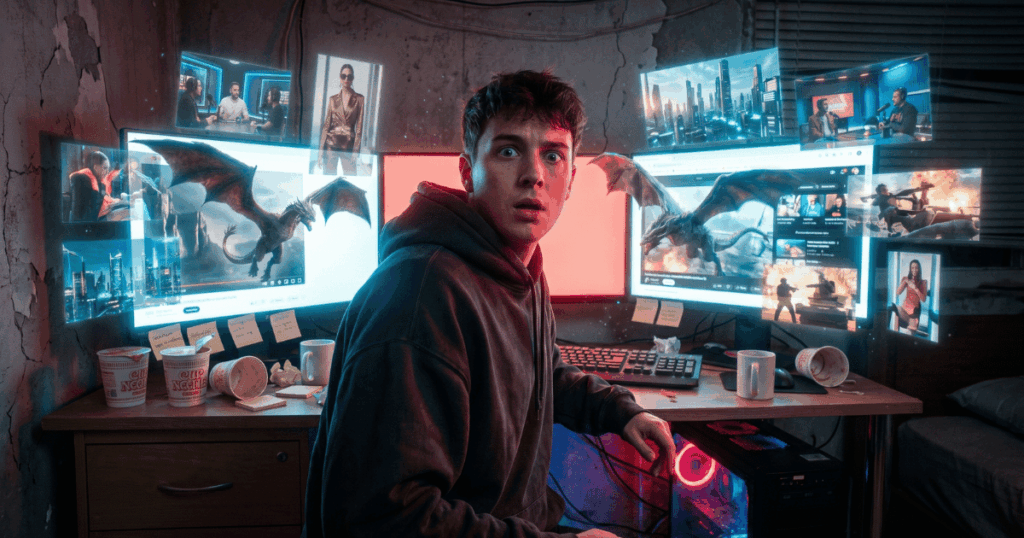
No selfies.
No vlogs.
No personal exposure.
Just storytelling, emotion, visuals, and ideas.
Faceless content is no longer a niche strategy. It’s becoming the future of online creation.
And the reason is deeper than most people realize.
People don’t actually connect with faces first.
They connect with feelings.
The Rise of Faceless Content
Search almost any platform today and you’ll notice something interesting.
Some of the fastest-growing accounts barely show a human face at all.
You’ll find:
- Cinematic AI-generated videos
- Motivational storytelling channels
- Animated explainer pages
- Relaxing aesthetic edits
- Documentary-style reels
- Anonymous commentary creators
- Quote videos with emotional visuals
- AI-narrated storytelling accounts
Many of these pages generate millions of views every month.
Some creators make affiliate income.
Others build digital businesses.
Some grow communities that eventually become brands.
And many are doing it quietly from a bedroom with a laptop.
That’s the real shift.
The internet is moving from personality-first content to emotion-first content.
Why So Many People Are Choosing to Stay Anonymous
There’s a reason faceless content is exploding right now.
Actually, there are several.
Privacy Matters More Than Ever
Not everyone wants their personal life attached to their income.
Many people want freedom without becoming publicly recognizable.
They want to create online without:
- Sharing family details
- Showing their home
- Dealing with judgment
- Becoming socially exposed
- Feeling constantly “on”
Faceless content gives creators distance while still allowing deep connection.
You can inspire people without sacrificing privacy.
That’s powerful.
Most People Are Afraid to Start on Camera
This is the hidden truth nobody talks about.
Millions of talented people never create content because they hate being filmed.
They overthink:
- Their appearance
- Their voice
- Their confidence
- Their background
- Their speaking skills
So they stay silent.
Faceless content removes that barrier completely.
Instead of focusing on yourself, you focus on the story.
And strangely enough, that often creates stronger content.
Audiences Care More About Emotion Than Identity
Think about the last video that genuinely moved you.
Maybe it inspired you.
Maybe it made you emotional.
Maybe it made you think differently.
Now ask yourself:
Did the creator’s face actually matter?
Most of the time, the answer is no.
People remember:
- The feeling
- The message
- The visuals
- The music
- The atmosphere
- The story
Not the face.
This is why cinematic storytelling is outperforming traditional talking-head content in many niches.
The AI Revolution Changed Everything

The growth of faceless content would not be happening this fast without AI.
Artificial intelligence has completely lowered the barrier to entry.
Today, a single creator can generate:
- Cinematic visuals
- AI voiceovers
- Animated scenes
- Scripts
- Music
- Captions
- Editing workflows
- Story concepts
All from one laptop.
What once required a production team can now be created by one person in a few hours.
That changes the game completely.
A New Type of Creator Is Emerging
The old internet rewarded extroverts.
The new internet rewards creativity.
That’s a massive difference.
Now the best creators are often:
- Story thinkers
- Editors
- Emotional communicators
- Researchers
- Visual curators
- AI-assisted creators
Some never appear publicly at all.
And audiences don’t care because the content itself feels immersive.
The creator becomes invisible.
The experience becomes unforgettable.
Real-Life Example: The Anonymous Creator Model
Imagine this.
A 26-year-old creator works a normal 9-to-5 job in Texas.
They don’t want coworkers seeing them online.
They don’t want family attention.
They don’t feel comfortable speaking to a camera.
But they love storytelling.
So they start a faceless YouTube channel about mindset and self-improvement.
They use:
- AI-generated cinematic visuals
- Emotional background music
- Simple narration tools
- Short motivational scripts
- Documentary-style editing
At first, only a few people watch.
Then one video suddenly reaches 50,000 views.
Another reaches 300,000.
Six months later:
- Their channel earns ad revenue
- They promote digital products through affiliate links
- Brands begin reaching out
- Their audience grows daily
And almost nobody knows who they are.
This isn’t fantasy anymore.
It’s happening every day.
Why Faceless Content Feels More Cinematic
Traditional influencer content often feels personal.
Faceless content feels immersive.
That’s a huge psychological difference.
When viewers don’t see a creator’s face constantly, their imagination becomes more active.
The content feels:
- Larger
- More emotional
- More universal
- More cinematic
It becomes easier for audiences to project themselves into the story.
This is exactly why faceless motivational videos, documentary edits, and AI cinematic reels perform so well.
They create emotional space.
And emotional space keeps people watching.
The Psychology Behind Why People Keep Watching
Modern attention spans are short.
But emotion still stops scrolling.
Faceless content often succeeds because it creates curiosity immediately.
A mysterious visual.
A dramatic quote.
A cinematic opening line.
The brain wants resolution.
This triggers emotional engagement faster than many traditional creator videos.
There’s also another psychological factor:
Mystery Creates Attention
Humans are naturally curious.
When audiences don’t fully know the creator, the content itself becomes more intriguing.
That mystery increases:
- Watch time
- Retention
- Curiosity
- Shareability
Sometimes anonymity becomes part of the brand itself.
You Don’t Need Expensive Equipment Anymore
This is one of the biggest myths still holding people back.
You do not need:
- A studio
- Professional cameras
- Expensive lighting
- Advanced editing experience
Most viral faceless creators started incredibly simple.
Many began with:
- Free editing tools
- AI image generators
- Stock footage
- Mobile apps
- Simple storytelling formats
The internet rewards consistency and emotional connection more than perfection.
That’s why ordinary people are suddenly competing with large creators.
AI leveled the playing field.
The Best Niches for Faceless Content
Not every niche works equally well with faceless creation.
But some niches are exploding right now.
1. Motivation & Self-Improvement
Emotional storytelling performs extremely well here.
People want:
- Inspiration
- Discipline
- Hope
- Productivity
- Confidence
Cinematic visuals paired with emotional narration create powerful engagement.
2. AI & Future Technology
Ironically, faceless formats work perfectly for AI-related content.
Audiences care more about information and visuals than personalities in this niche.
3. History & Documentary Content
Storytelling dominates here.
Viewers become immersed in the narrative itself.
4. Finance & Passive Income
Animated explainers, text-driven visuals, and cinematic editing often outperform basic talking-head videos.
5. Relaxing & Aesthetic Content
Ambient visuals, quotes, calm music, and mood-driven edits are growing rapidly across Instagram and YouTube Shorts.
🚀 Ready to Create Cinematic Videos Without the Usual Complexity?
How to Start Creating Faceless Content
Starting is much easier than most people think.
Here’s a practical approach.
Step 1: Choose an Emotion, Not Just a Topic
Don’t only ask:
“What niche should I pick?”
Ask:
“What feeling do I want people to experience?”
Examples:
- Motivation
- Curiosity
- Nostalgia
- Inspiration
- Calmness
- Wonder
Emotion builds loyalty.
Step 2: Build Around Storytelling
Even short-form content needs narrative.
A simple structure works:
- Hook
- Emotion
- Tension
- Resolution
People remember stories far more than information.
Step 3: Use AI as an Assistant, Not a Replacement
AI can help with:
- Script ideas
- Visual concepts
- Editing workflows
- Voiceovers
- Captions
But the emotional direction still comes from you.
That human emotional instinct is what separates forgettable content from powerful content.
Step 4: Focus on Consistency Over Perfection
Most creators quit too early.
The internet rewards repetition.
One great faceless video can completely change a creator’s trajectory.
But consistency creates the opportunity for that moment to happen.
The Future of Personal Branding Might Be Less Personal
This sounds contradictory, but it’s true.
The future of branding may become more anonymous while feeling more emotionally connected.
People are getting tired of overly polished influencer culture.
Audiences now crave:
- Authentic emotion
- Creative storytelling
- Cinematic experiences
- Meaningful ideas
Not endless selfies.
Faceless creators are succeeding because they focus on how content feels instead of constantly focusing on themselves.
And that shift is changing the internet.
The Hidden Opportunity Most People Still Don’t See
Right now, many people still believe content creation requires:
- Fame
- Confidence
- Extroversion
- Public exposure
But faceless content proves otherwise.
You can:
- Build an audience
- Grow a business
- Create affiliate income
- Inspire people
- Develop a brand
Without turning your personal life into public entertainment.
That freedom is attracting an entirely new generation of creators.
Quiet creators.
Creative thinkers.
Story-driven entrepreneurs.
People who previously stayed invisible online are finally stepping into the digital economy.
Just differently.
Faceless content is not just a trend.
It’s a reflection of where digital culture is heading.
People want freedom.
Privacy.
Creativity.
Flexibility.
And audiences are learning that emotional connection doesn’t require constant personal exposure.
In many cases, the strongest stories come from creators we never actually see.
That’s the beauty of this new era.
The internet no longer belongs only to the loudest people in the room.
Now it belongs to the most emotionally compelling storytellers.
Even if they remain completely anonymous.
👉 Explore Cinemation Elite and see what’s possible.
- YouTube Thumbnail Test: 3-Option Plan for Faceless Channels
- Meta Now Turns Static Images Into Video Ads: What to Know
- Brands Can Now Promote Your Pins: What Creators Should Know
- Adobe Firefly August 2026 Update: Video, C2PA & Credit Tiers
- I Stopped Putting Affiliate Links Directly on Pinterest — Here’s What I Do Instead